Red Floral Bouquet Embroidery File
A Designer’s First Look: Graceful, Not Fussy
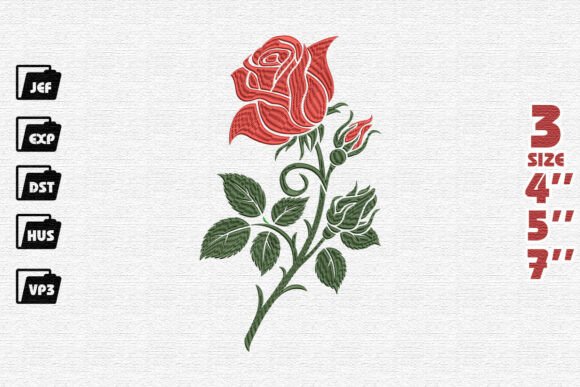
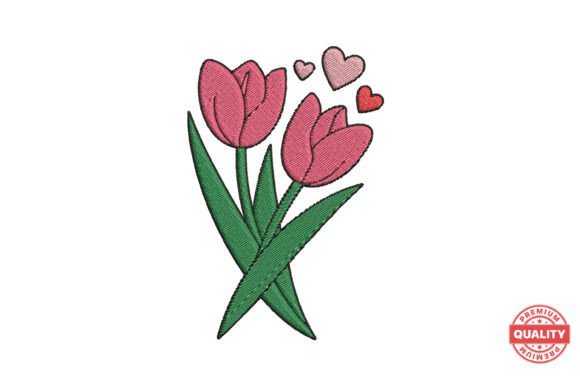
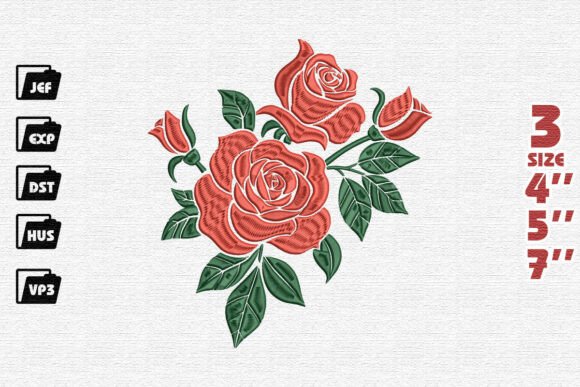
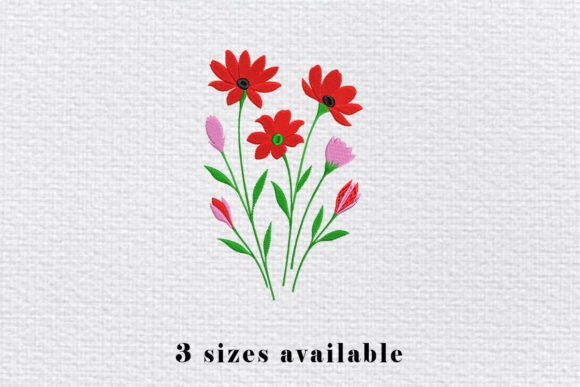
When I opened the Red Floral Bouquet Embroidery File, what struck me first wasn’t just the color—it was the breathing room. This isn’t a tightly packed, high-density floral explosion. It’s a soft, balanced composition: three main blooms (a central rose-like form flanked by two smaller peony or ranunculus shapes), tender green stems that curve with quiet confidence, and subtle unopened buds nestled near the base. The layout feels intentional—not symmetrical, but harmonious. As a designer who’s stitched hundreds of floral motifs for client work, I appreciate how this avoids visual fatigue. It leans into elegance over busyness, making it ideal for products where subtlety signals care—think boutique baby onesies, linen tea towels, or minimalist aprons.
Where It Shines: Real Projects, Real Customers
Last week, I prepped a custom order for a local café: embroidered cotton tote bags for their spring launch. I tested the Red Floral Bouquet Embroidery File on natural canvas—medium-weight, slightly textured—and it held up beautifully. The satin stitch petals retained crisp edges without puckering; the fill stitch in the leaves had just enough texture to read as organic, not flat. Customers responded immediately: “It looks handmade, not mass-produced.” That’s the quiet power of this design—it reads as thoughtful, not templated.
I’ve also used it on lightweight sweatshirts for a small-batch Etsy shop. On heather grey French terry, the reds pop without screaming; the pink tones soften against the fabric’s subtle grain. For baby embroidery? It works well on interlock knit—but only with tear-away + cut-away stabilizer combo. The stems are narrow enough that stretch can distort them if stabilization is light. As an embroidered patch? Yes—but size matters. Below 3.5 inches wide, the smallest buds start to lose definition. Keep it at 4–5 inches for optimal clarity across fabric types.
Where to Pause and Plan
This isn’t a one-size-fits-all motif. On dark fabric—especially charcoal or navy—the green stems need careful thread selection. Standard kelly green can fade visually unless you use a slightly brighter or more yellow-toned green thread. Likewise, on thin fabrics like voile or rayon challis, the stitch density (while moderate) still benefits from a lightweight fusible stabilizer underneath—no exceptions. Curved surfaces like cap fronts require repositioning the bouquet so stems follow the dome’s contour, not fight it. And while it’s lovely on pillow covers, avoid placing it directly over seam allowances or zipper pulls—those tight corners compress stitches and blur delicate petal outlines.
It’s also not ideal for ultra-minimalist branding. If your shop aesthetic is stark black-and-white line art, this lush, dimensional bouquet may feel tonally misaligned. But for makers leaning into warmth—think handmade soap labels, botanical-themed stationery bundles, or holiday gift sets—it adds instant emotional resonance.
What It Adds to Your Finished Product
The Red Floral Bouquet Embroidery File elevates perceived value without demanding premium pricing. Stitched cleanly, it signals craftsmanship—not just decoration. Customers notice the way light catches the satin stitch curves, how the green stems recede just enough to let the reds lead. That nuance builds trust: they believe you paid attention to detail, which makes them more likely to return, tag you on social, or recommend your shop.
For Etsy sellers and craft fair vendors, it’s a strong anchor design—versatile enough for multiple product categories (tote bag design, sweatshirt embroidery, baby embroidery, holiday embroidery), yet distinct enough to become a recognizable signature. When paired with neutral backgrounds and consistent thread palettes, it strengthens brand consistency across listings and printable mockups. And because it sits comfortably in the Single Flowers category without feeling generic, it helps with discoverability—without sacrificing personality.
Practical Notes Every Embroidery Designer Should Check
- Always test on scrap fabric first—especially if using textured, stretchy, or dark fabric. Note how the stems hold shape after washing.
- Review thread color contrast before stitching large batches. Red and pink threads behave differently on light vs. dark grounds—swatch both.
- Confirm hoop size compatibility. This design flows best in a 5x7" hoop or larger. If you’re limited to 4x4", verify whether the file includes a scaled-down version—or be prepared to crop thoughtfully.
- Inspect small details at 200% zoom in your embroidery software: look for stray running stitch anchors, overly dense fill areas, or tiny elements that may vanish on coarse weaves.
- Test black-and-white mockups to gauge silhouette strength. A good floral embroidery file should read clearly even without color cues.
- Use proper stabilizer—cut-away for knits, tear-away for stable wovens, and fusible for slippery fabrics. Skimping here undermines the entire Red Floral Bouquet Embroidery File execution.
- Check licensing before selling finished items or digital embroidery files. If you plan to offer this as part of a commercial embroidery service or bundle it with other Embroidery assets, confirm usage rights upfront.
Final Thought: A Quiet Workhorse, Not a Flashy Gimmick
The Red Floral Bouquet Embroidery File won’t shout—but it will linger. It’s the kind of design that looks better after repeated wear, not worse. It suits the maker who values longevity over trend-chasing, and the customer who chooses handmade because they want something that feels seen. Whether you’re stitching personalized gifts, building a craft business, or sourcing reliable design assets for client projects, this bouquet earns its place—not as filler, but as foundation.