Kite Embroidery Design Review
A Cheerful, Lightweight Design That Flies Well on Real Projects
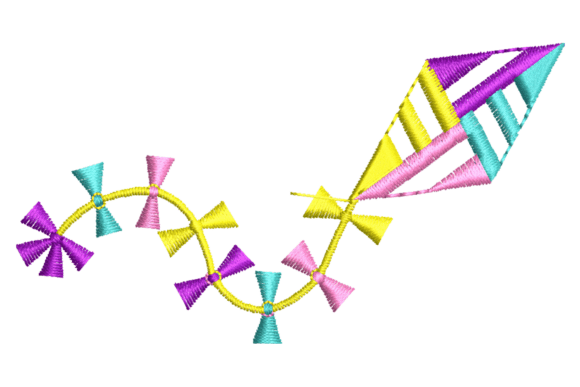
As an embroidery designer who’s stitched thousands of commercial orders—from Etsy baby blankets to boutique apron collections—I approached the Kite Embroidery Design with a mix of curiosity and caution. Toys-themed embroidery files can easily veer into overly cutesy or technically fragile territory. But this one? It landed gently—like a well-balanced kite catching just the right breeze. The visual mood is joyful but not saccharine: clean lines, open negative space, and a sense of upward motion that reads instantly, even at small sizes. It’s not overloaded with satin-stitch flourishes or dense fill areas, which immediately signaled good adaptability for real-world use.
Fits Naturally Into Everyday Handmade Categories
The Kite Embroidery Design feels purpose-built for lightweight, cheerful applications—not heavy-duty outerwear or intricate heirloom pieces. I tested it across several product types we regularly produce: a linen kitchen towel, a cotton twill tote bag, a unisex kids’ sweatshirt, and a 6-inch embroidered patch for a craft fair display. In every case, it held its shape and charm. On the towel, the design read clearly without stiffness; on the sweatshirt, it didn’t pull or distort the knit. As a machine embroidery design, it avoids tight corners and micro-details that struggle on stretchy fabric—no tiny tails, no nested curves under 3mm radius. That makes it unusually forgiving for custom apparel and beginner-friendly for small business owners scaling their embroidery offerings.
Performance Notes Across Common Use Cases
- Tote bags & aprons: Works beautifully on medium-weight woven fabrics. Stitch density is moderate—no excessive underlay or overlapping fills—so it lies flat and softens nicely after washing.
- Baby blankets & nursery decor: The open composition means less thread bulk, reducing scratchiness—a real win for sensitive skin. Pair it with pastel thread colors for gentle contrast on light fabrics.
- Caps & curved surfaces: Not ideal for full-coverage cap fronts due to its horizontal orientation and subtle asymmetry, but excellent as a side-temple accent or back-strap detail when resized to 2.5–3 inches wide.
- Embroidered patches: Clean edges and minimal jump stitches make it a strong candidate for iron-on or sew-on patches—just confirm the file includes a tack-down or border stitch if you’re cutting and sealing.
- Dark fabric & low-contrast thread: Because the design relies on silhouette and flow rather than fine interior detail, it holds up well on navy or charcoal—but always test thread color contrast on scrap first. A bright yellow or sky-blue thread lifts the mood instantly.
What It Adds to Your Handmade Product—and Your Brand
This isn’t just another digital embroidery file—it’s a subtle brand amplifier. When used thoughtfully, the Kite Embroidery Design elevates perceived value without raising production complexity. Customers notice the lightness, the movement, the handmade intention behind it. On Etsy listings, it performs especially well in product photography: the shape reads cleanly against neutral backdrops, and it scales beautifully in printable mockups for social media or digital lookbooks. For creative entrepreneurs building cohesive collections—say, a “Summer Play” line of totes, towels, and baby onesies—it adds visual rhythm and thematic consistency without demanding matching fonts or palettes. It also strengthens giftability: parents love the nostalgic yet fresh energy, and teachers appreciate its cheerful neutrality for classroom giveaways.
Practical Embroidery Tips Before You Stitch
Before committing to a customer order or batch run, here’s what I recommend:
- Test on scrap fabric that matches your final substrate—especially if using textured weaves (like waffle-knit towels) or blends (cotton-poly knits).
- Review stitch density in your embroidery software. Look for any isolated satin-stitch sections that might need manual adjustment for stability on stretchy fabric.
- Confirm hoop size—this design likely fits comfortably in a 4×4 hoop, but double-check the Creative Fabrica embroidery product page to avoid surprises during hooping.
- Use appropriate stabilizer: Tear-away works well for stable wovens; cut-away adds security for knits or frequent-wash items like baby blankets.
- Inspect small details post-stitch, especially the tail end of the kite string and wing tips—some versions may include a delicate running stitch element that benefits from slight enlargement (5–8%) on high-density machines.
- Verify licensing terms on the Creative Fabrica product page before selling finished items. This is an Embroidery file in the Toys category, so confirm commercial use permissions align with your business model—especially for resale on platforms like Etsy or at local craft fairs.
Final Thought: Joy With Integrity
The Kite Embroidery Design doesn’t try to be everything. It doesn’t mimic photorealism or cram in decorative extras. Instead, it delivers honest, functional joy—a rare balance in today’s crowded digital design marketplace. For embroidery designers building reliable, scalable product lines—or small business owners selecting their next best-selling design asset—it earns trust through consistency, clarity, and quiet craftsmanship. It won’t overwhelm your hoop, your budget, or your customer’s expectations. And when your buyer unrolls a kite-embroidered pillow cover or tugs on a sun-faded tote bag three summers later, that simple, soaring shape still says exactly what it set out to: lightness, play, and handmade care.